Category: English Learners

ESL vs ELL
EL and ELL name the student; ESL names the instruction. Here is what the difference means for compliance, funding, and data in your district.
What Is an English Learner?
The federal definition of an English Learner, the difference between EL, ELL, and ESL, how students are classified, and what the classification actually commits a district to.
Programs for English Language Learners
The main programs for English language learners, dual language, bilingual, sheltered, and ESL, compared for district leaders, with funding pathways.
English Learners
More than 5.3 million English Learners are enrolled in U.S. public schools. This guide covers identification, assessment, funding, instructional programs, and the biggest gap in EL instruction, written for the administrators who run these programs.
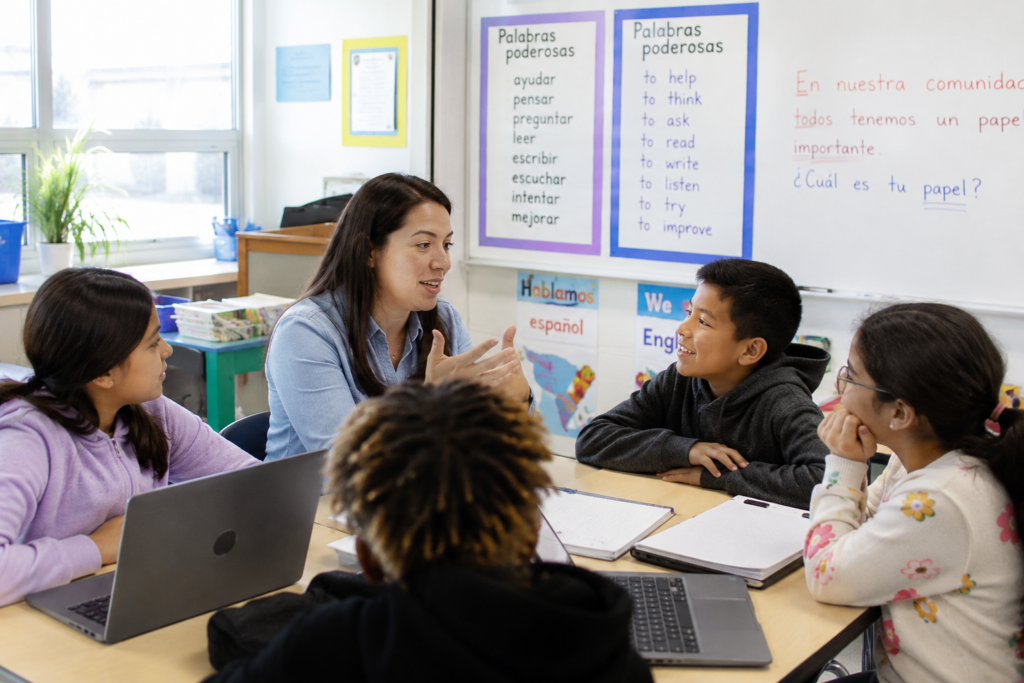
Small group instruction for English Learners: a teacher leading four diverse elementary students at a table while others work independently
How small group instruction works for English Learners, its benefits and drawbacks, four steps to start, and why it still cannot close the speaking gap.
Resources for ELLs: a teacher and diverse elementary students using laptops and bilingual print materials in a bright classroom
A practical guide to resources for ELLs: instructional, assessment, family-engagement, and technology tools, how to choose them, and how to fund them.
AI for English learners: the Telo robot helping a student practice English in class
What AI for English learners actually does, where it helps most, how to evaluate it for safety and efficacy, and how districts can fund it.
Technology for ELL students: a classroom robot and devices used by young English learners with a teacher
A district guide to technology for ELL students: the categories that matter, how to evaluate tools, how to fund them, and the one capability that moves outcomes.
Challenges English learners face: a teacher supporting a diverse, multi-age group of students in class
The academic, linguistic, and systemic challenges English Learners face, why they persist, and the practical steps districts can take to address them.
Student talk time: diverse English Learners speaking in small groups across an active classroom
English Learners need far more speaking time than school provides. Why student talk time drives acquisition, the math behind the gap, and how to close it.