

Estimated reading time: 8 minutes
The TELPAS testing window for 2026-2027 is a six-week window that opens on February 15, 2027 and closes on March 26, 2027, when all TELPAS and TELPAS Alternate data must be completed and processed by 11:59 p.m. Central time. Results reach district testing coordinators on May 19, 2027 for TELPAS and April 6, 2027 for TELPAS Alternate, and families see them in the Texas Assessment Family Portal from June 10, 2027 (April 26 for TELPAS Alternate). This guide lists every date, the manuals, the accommodations framework and what to plan before the window.
Table of contents
Executive Summary
TELPAS is given once a year, in a single statewide spring window set by the Texas Education Agency. For 2026-2027, TEA has scheduled a six-week window ending March 26, 2027, and “highly recommends that district coordinators plan to test and submit data early,” keeping the last week for verification. Grades 2-12 take two online tests, listening and speaking, and reading and writing, on different days; kindergarten and grade 1 are rated holistically by trained teachers.
2026-2027 is also the first TELPAS transition year after the revised ELPS: the tests assess only the 2024 standards that overlap with the 2007 ELPS, and holistic ratings use TEA’s eligible transition PLDs.
Key Takeaways
- Window: February 15 to March 26, 2027, six weeks.
- Deadline: all data completed and processed by 11:59 p.m. CT on March 26, 2027.
- Results to districts: May 19, 2027 (TELPAS), April 6, 2027 (TELPAS Alternate).
- Family Portal: June 10, 2027 (TELPAS), April 26, 2027 (TELPAS Alternate).
- Test time: TEA suggests scheduling three to four hours; students finish in about three.
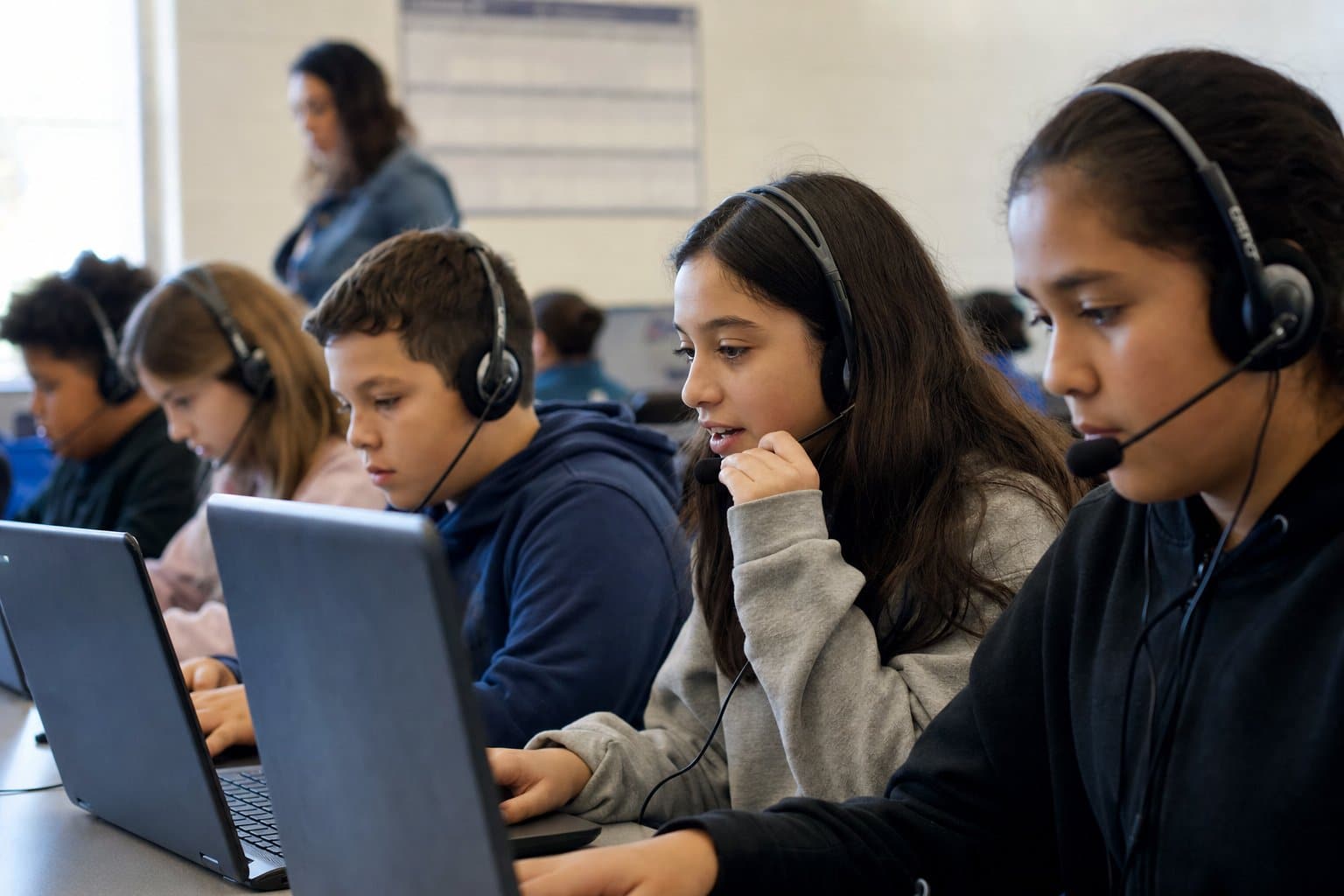
- Headsets: one per student for listening and speaking.
TELPAS Dates for 2026-2027
| Milestone | TELPAS (K-12) | TELPAS Alternate (2-12) |
|---|---|---|
| Testing window | Six weeks, February 15 to March 26, 2027 | Six weeks, ending March 26, 2027 |
| All data completed and processed | March 26, 2027, 11:59 p.m. CT | March 26, 2027, 11:59 p.m. CT |
| Results for district testing coordinators | May 19, 2027 | April 6, 2027 |
| Results for educators in TIDE | May 21, 2027 | April 9, 2027 |
| Administration reports, Secure File Center | June 1, 2027 | April 21, 2027 |
| Reports in the Family and Research Portals | June 10, 2027 | April 26, 2027 |
| Final reports, Secure File Center | July 16, 2027 | May 12, 2027 |
| Final reports, Family and Research Portals | July 27, 2027 | May 18, 2027 |
Sources: the testing calendar in TEA’s District and Campus Coordinator Resources (updated August 20) and TEA’s Reporting for the Texas Assessment Program, 2026-2027 School Year (August 2026). Region 13’s summary of the calendar lists February 15 to March 16, 2027 for TELPAS Alternate; TEA’s own calendar sets the TELPAS Alternate data deadline at March 26, 2027, so follow TEA. For TELPAS Alternate, TEA asks that all Observable Behavior ratings be submitted by that deadline.
How the TELPAS Window Works
Quick answer: every Emergent Bilingual in grades K-12 must be assessed and accounted for within the six weeks, and TEA recommends finishing early.
- Grades 2-12: two online tests, listening and speaking, and reading and writing, administered on different days. TEA’s manual recommends scheduling three to four hours in total; students are expected to finish in about three.
- Kindergarten and grade 1: holistically rated observational assessments in all four domains, entered by trained raters.
- Staffing: at least one trained test administrator for every 30 students in each testing room, and one headset for each student taking listening and speaking.
- Verification: TEA asks coordinators to use the last week to ensure “that all eligible students have been tested and that all student data has been submitted, reviewed, and verified in TIDE.”
What the speaking test asks for, and how to prepare students for it, is in our guide to TELPAS speaking.
TELPAS Manuals and Guides
| Document | For whom |
|---|---|
| TELPAS Test Administrator Manual | Test administrators of the online tests (the 2025-2026 edition, updated on TEA’s page September 18, 2026) |
| TELPAS Rater Manual | Teachers who assign holistic ratings (updated October 13, 2025) |
| TELPAS Paper and Holistic Test Administration Information | Coordinators of paper and holistic administrations (updated October 13, 2025) |
| TELPAS Educator Guide | Teachers and campus leaders: what the tests contain and how results are reported |
| District and Campus Coordinator Resources | District and campus testing coordinators: calendar, procedures, TIDE |
TEA updates these documents during the year, so check the TELPAS Resources page for the edition that covers spring 2027.
TELPAS Accommodations
TEA’s test administrator manual groups supports for TELPAS into three categories: accessibility features available to all students, designated supports that can be approved locally, and designated supports that require TEA approval. TEA’s Accommodation Resources (updated September 2, 2026) set the accommodation policies that apply to STAAR and TELPAS, and the TELPAS Resources page carries the TELPAS specifics. Check both before the window, and the student’s documented supports, rather than carrying over a STAAR plan unchanged.
Students with the most significant cognitive disabilities who meet the participation requirements take TELPAS Alternate instead.
Where Families See TELPAS Scores
TELPAS results are reported as a proficiency rating in each domain plus a composite rating, with each domain counting for 25 percent. TEA’s educator guide explains that “TELPAS report cards are reports that explain TELPAS results to parents,” produced in English and Spanish and available in the Family Portal at texasassessment.gov. For 2027, that is June 10 for TELPAS and April 26 for TELPAS Alternate. How to read the ratings is in TELPAS scores explained.
Planning Backward From February 15
| When | What to do |
|---|---|
| October to December | Rater training and calibration for K-1 raters; test administrator training |
| January | Confirm accommodations; check devices and one headset per student |
| Two to four weeks before | One Practice Test Site session per student in grades 2-12 |
| February 15 to March 19 | Test early, as TEA recommends |
| Last week (to March 26) | Verify that every student is accounted for in TIDE |
| May to June | Review results; plan family communication before the Family Portal opens |
District Benchmark: Three Hours per Student
Take a district with 3,000 Emergent Bilinguals in grades 2-12. At about three hours each, TELPAS takes some 9,000 student-hours inside six weeks, in two separate sessions per student, with one headset each for listening and speaking and one test administrator per 30 students. Districts that schedule the listening and speaking sessions in the first half of the window keep the last week free for make-ups and verification, as TEA recommends.
Common Mistakes
- Planning to the last day. TEA reserves the last week for verification.
- Running both tests on the same day. They are administered on different days.
- Using last year’s manual without checking for the spring 2027 edition.
- Promising families results in May. The Family Portal opens June 10.
- Using the full 2024 PLDs for K-1 ratings, instead of TEA’s eligible transition PLDs.
Recommended Actions
Immediate (this month): Put the window, the March 26 deadline and the results dates on the district calendar.
Medium-term (this year): Complete rater calibration and test administrator training before winter break.
Long-term (strategy): Plan how 2027 results will be read during the transition years, and how they feed LPAC decisions.
Questions District Leaders Should Ask
- Which campuses test in the first half of the window?
- Do we have one headset per student for listening and speaking?
- Are all K-1 raters calibrated before the window?
- How will we explain 2027 TELPAS results to families in June?
Frequently Asked Questions
When is the TELPAS testing window for 2027?
From February 15, 2027 to March 26, 2027, six weeks. All data must be completed and processed by 11:59 p.m. Central time on March 26.
When is TELPAS Alternate given in 2027?
In the same six-week window, with data completed and processed by March 26, 2027. Results reach districts earlier, on April 6, 2027.
When are TELPAS results released in 2027?
To district testing coordinators on May 19, 2027, to educators in TIDE on May 21, and in the Family Portal on June 10, 2027.
How long does TELPAS take?
TEA’s manual suggests scheduling three to four hours in total for grades 2-12, with students expected to finish in about three, across two sessions on different days.
Where is the TELPAS manual for 2026-2027?
On TEA’s TELPAS Resources page, with the test administrator manual, the rater manual and the paper and holistic administration information. Check the date on each document for the spring 2027 edition.
What accommodations are allowed on TELPAS?
TEA groups them into accessibility features, locally approved designated supports and designated supports requiring TEA approval. The list by assessment is in TEA’s Accommodation Resources.
Related Resources
- TELPAS Practice Test
- TELPAS Speaking
- TELPAS Scores Explained
- TELPAS Proficiency Level Descriptors
- TELPAS Alt
- TELPAS Explained
Conclusion
The 2027 TELPAS window runs from February 15 to March 26, with results in May and in the Family Portal on June 10. Districts that train raters before winter break, test early and keep the last week for verification get through the window cleanly, and have time to plan how the first transition-year results will be read.
Sources: TEA District and Campus Coordinator Resources, Testing Calendar; TEA, Reporting for the Texas Assessment Program, 2026-2027; Region 13, Texas State Assessment Administration Dates 2026-2027 (August 20, 2026); TEA, TELPAS Test Administrator Manual; TEA, TELPAS Educator Guide; TEA, Accommodation Resources. Verified September 28, 2026.
The Rating Was Built Before February
By February 15, the logistics are what the district can still change: sessions, headsets, rater calibration, verification. The ratings themselves were built in the months before.
Speaking shows it most. A 90-second TELPAS prompt asks for connected, academic speech that students only produce after many attempts with someone responding, and a class of twenty-five leaves each student little of that time. That is the Speaking Time Gap.
Some Texas districts use the fall to add speaking practice that does not wait for the teacher’s turn. Telo AI is one example: five-minute sessions three times a week that adapt to each student’s level and push past one-word answers, with progress reported on a dashboard mapped to the Texas ELPS. See how that works across a school year.
The window sets the date of the measurement. The months before set the result.
Found this guide useful?
Preferred sources show up more often in your Google results, including AI Overviews.