

Last updated:
Estimated reading time: 6 minutes
Bringing AI into elementary classrooms is not science fiction, it is a practical way to give every child more individualized practice. For English Learners in particular, the biggest constraint is speaking time: language acquisition needs active conversation, and one teacher cannot give 25 students enough of it. This guide shows how K-5 teachers use Telo for English Learners to add individualized speaking practice during the routines they already run, without disrupting the schedule.
Table of contents
It Fits the Routines You Already Run
Most elementary teachers already structure the day around small groups and rotations. Telo slots into those routines:
- Small group during math or literacy
- Learning centers or station rotations
- Intervention blocks (Tier 2 and Tier 3 within MTSS)
- Independent work blocks
No new schedule is required. While the teacher leads one group, students rotate through a Telo station for individualized practice and speaking.
How Telo Works in the Classroom
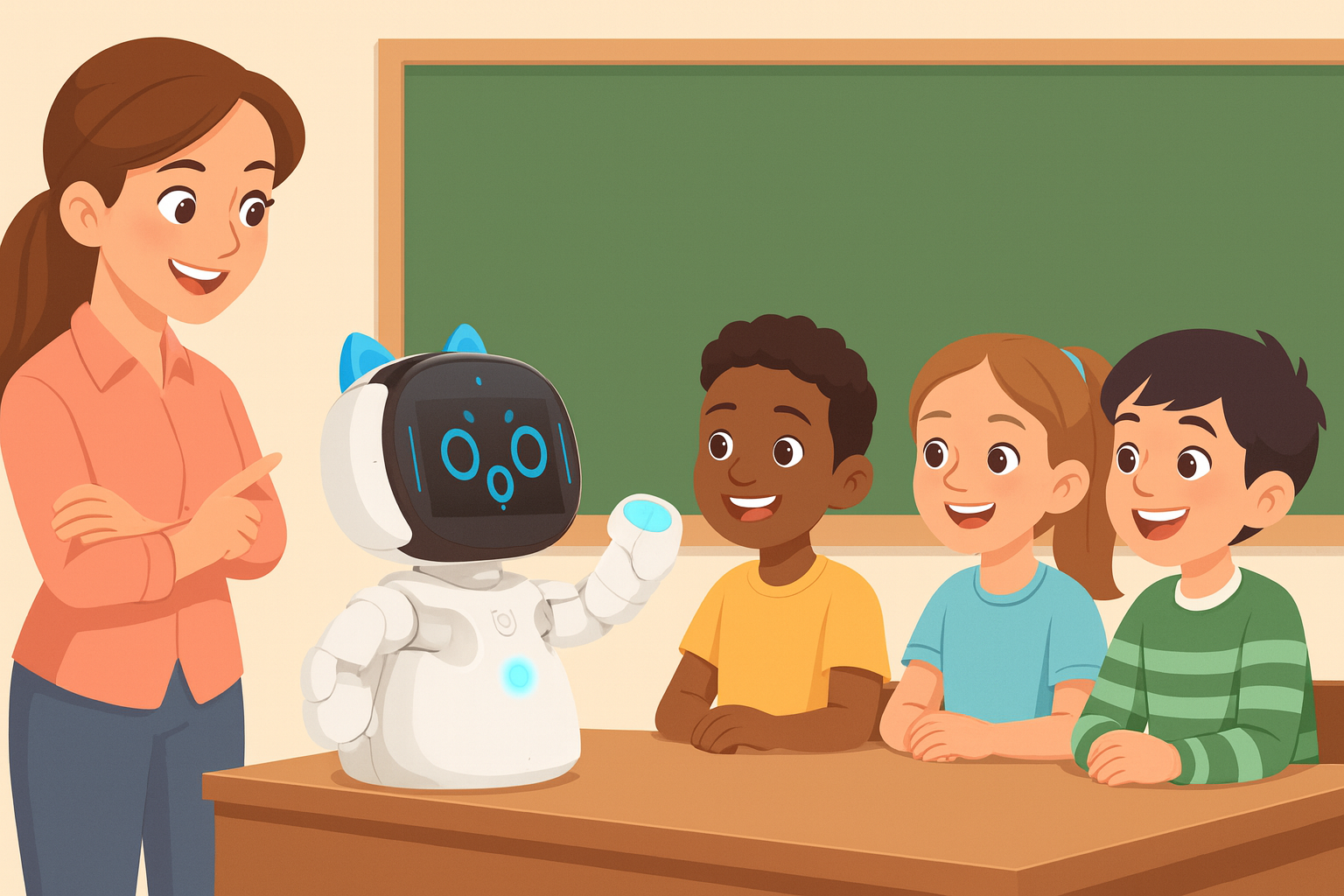
Telo is an AI-powered learning companion designed for one-on-one practice. It talks and listens to the student, delivers standards-aligned lessons in language, reading, and foundational skills, adapts in real time to responses, and tracks engagement and mastery for teacher review. The teacher selects lessons from a dashboard, and Telo delivers them in 10 to 15 minute sessions per student.
For English Learners, the most valuable feature is unlimited, low-anxiety speaking practice: a student can talk, be understood, and get feedback every single session, which is exactly the practice a busy classroom cannot otherwise guarantee.
Three Ways to Use Telo for English Learners
- During literacy or math centers. Telo becomes one station. One group works with the teacher, one practices individually with Telo, the rest do independent work.
- During Tier 2 and Tier 3 intervention. ELs receiving MTSS support practice targeted skills with Telo while the teacher works one-on-one with another student and the system logs progress for data-based decisions.
- For IEP or language-goal practice. Students who need repetition and pacing get individualized, adaptive practice that reinforces specific goals such as phonemic awareness, vocabulary, or oral language, with less need for constant adult supervision.
How Many Do You Need?
Start with one per classroom and scale toward three as you build a full rotation. A single unit is enough to add an individualized speaking station that students rotate through daily or weekly. Three units let an entire class of 20 to 24 students cycle through one-on-one practice within a single instructional block, with each device delivering a different lesson by student need. The right number depends on class size and budget, so begin with one, prove the routine, then scale.
| Setup | Best for | What it enables |
|---|---|---|
| 1 per classroom | Getting started, tight budgets | One individualized speaking station in the rotation |
| 3 per classroom | Full-class rotation | 20-24 students cycle through one-on-one practice in one block |
Why Speaking Time Is the Real Constraint
The reason this matters is the Speaking Time Gap. A teacher with 25 students in a 45-minute block has about 1,125 student-minutes to share. Even if half were pure one-on-one conversation, each student would get roughly 5 minutes a day, and English Learners need far more active speaking to acquire language. The gap is arithmetic, not a teaching flaw. Adding individualized practice stations is how a classroom multiplies speaking time without adding adults.
Funding and Implementation
Districts typically fund EL technology through Title III (supplemental EL instruction and technology), Title I (school-wide academic support), IDEA (for students with an identified disability), and state EL funding. Telo can also be purchased through the TIPS Cooperative, which often avoids a separate RFP. (ESSER pandemic-relief funds have expired, so plans that once relied on them need a replacement source.)
Frequently Asked Questions
How does Telo help English Learners?
It gives each EL individualized, low-anxiety speaking practice with real-time feedback during centers and intervention blocks, adding the conversation time that a full classroom cannot otherwise provide.
Can Telo be used for Tier 2 and Tier 3 interventions?
Yes. Telo works as a station within an MTSS block, delivering targeted, adaptive practice while logging progress data for the teacher’s intervention decisions.
How many Telo units does a classroom need?
One is enough to start and add a speaking station; three enable a full class to rotate through one-on-one practice in a single block. Begin with one and scale.
What funding can pay for Telo?
Title III, Title I, IDEA, and state EL funding are common sources, and purchasing through the TIPS Cooperative can streamline procurement.
Related Resources
- Complete Guide to English Learners in U.S. Schools
- MTSS for English Learners
- What Is an English Learner?
- Complete Guide to Title III Funding
- Book a Demo: See Telo AI in Action
Sources: NCES, English Learners in Public Schools; Colorín Colorado, MTSS for English Learners.
Found this guide useful?
Preferred sources show up more often in your Google results, including AI Overviews.