

Estimated reading time: 13 minutes
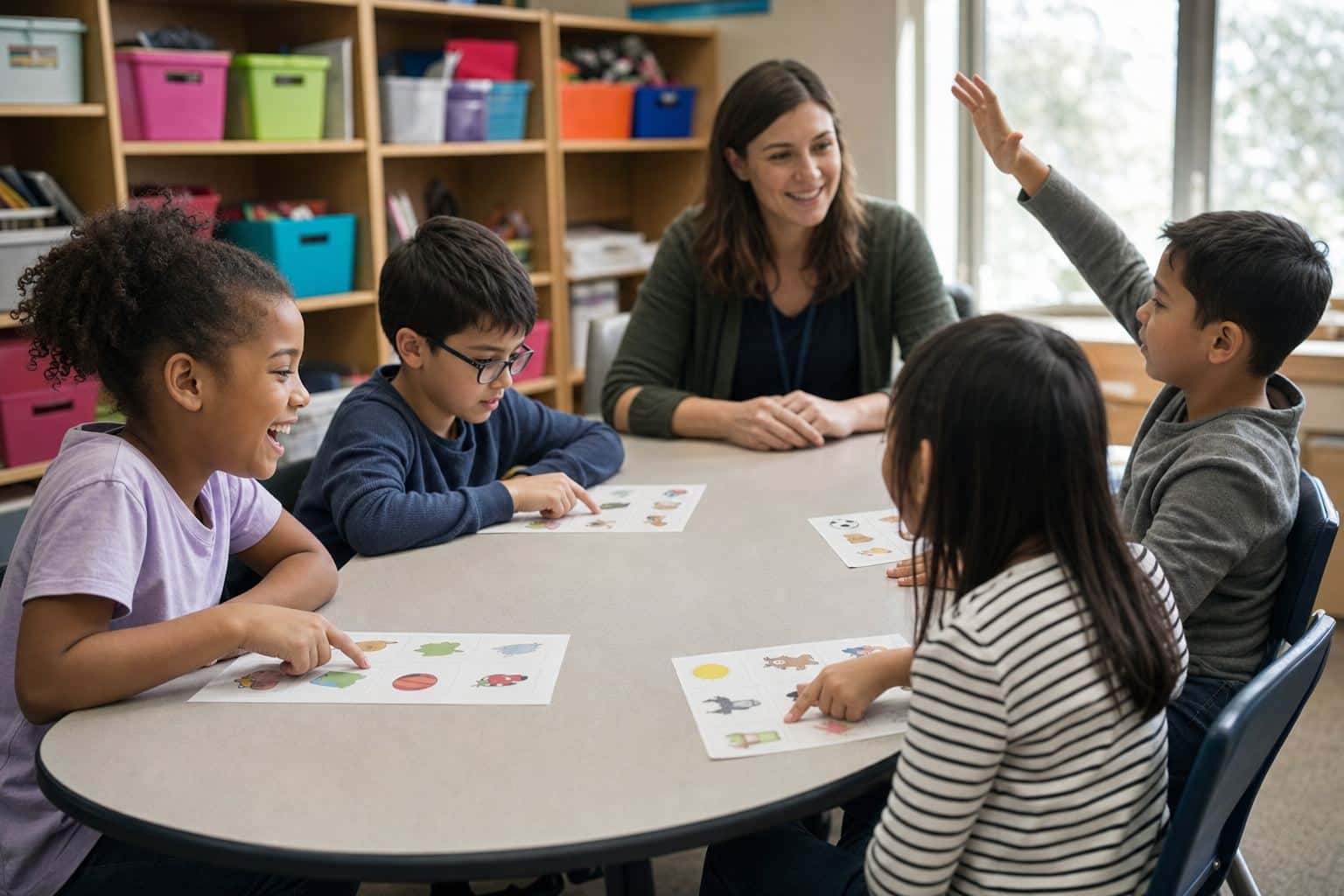
A resource room, in special education, is a separate classroom in a school where a special education teacher gives students with disabilities individual or small-group instruction for part of the school day, while they spend most of the day in general education classes. The Individuals with Disabilities Education Act (IDEA) lists resource room services among the “supplementary services (such as resource room or itinerant instruction)” provided “in conjunction with regular class placement” (34 CFR 300.115(b)(2)), and each student’s IEP states the minutes and location. This guide covers the K-12 meaning (not university or community resource rooms): resource room vs inclusion and self-contained classes, pull-out and push-in, the resource room teacher, state rules, scheduling, setup and the IEP.
Table of contents
Executive Summary
Federal data do not count resource rooms by name. In the 2024-25 school year, 68.1% of students ages 5 (in kindergarten) through 21 served under IDEA Part B were inside the regular class 80% or more of the day and 14.8% between 40% and 79%; most students who leave for resource room instruction fall in one of these two groups, depending on their minutes (U.S. Department of Education, OSEP).
States fill in the details. New York caps resource room groups at five students per teacher and time at half the day; Florida defines a resource room by 40% to 80% of the week with nondisabled peers.
Key Takeaways
- A resource room is part-time: students are usually placed in regular classes and leave for targeted instruction.
- It is special education: the time must deliver the specially designed instruction in the IEP.
- Pull-out and push-in are two ways to deliver the same services.
- State rules differ on group size, caseload and how much of the day counts as resource.
- Skills must transfer: what is learned in the resource room has to be used in the general class.
What Is a Resource Room in Special Education?
A resource room in special education is a small-group setting where students with IEPs who are placed in general education classes receive specialized instruction for part of the day.
New York’s definition is one of the clearest: a resource room program is “a special education program for a student with a disability registered in either a special class or regular class who is in need of specialized supplementary instruction in an individual or small group setting for a portion of the school day” (8 NYCRR 200.1(rr)). Examples are instruction the general class cannot provide at the needed intensity, such as decoding, written expression, math facts or study strategies; see specially designed instruction examples. Adapting “the content, methodology, or delivery of instruction” is what makes it special education (34 CFR 300.39(b)(3)), not extra homework time.
Resource Room vs Inclusion vs Self-Contained Classroom
A resource room sits between the inclusion classroom and the self-contained classroom: students are placed in general classes but leave them for a set part of the day.
| Feature | Inclusion classroom | Resource room | Self-contained classroom |
|---|---|---|---|
| Where instruction happens | General class all or most of the day | General class, plus part of the day in a separate room | Separate special class most or all of the day |
| Who teaches core subjects | General teacher, with a special educator co-teaching or supporting | General teacher; the special educator teaches targeted skills | Special education teacher, often with paraprofessionals |
| Group size | The whole class | Small groups (New York: at most 5 per teacher) | Small class capped by state rules (New York: 15 or fewer) |
| IDEA wording (34 CFR 300.114-300.115) | Regular classes with supplementary aids and services | Supplementary services “such as resource room” with regular class placement | “Special classes” |
| Closest OSEP environment, 2024-25 | Inside the regular class 80% or more (68.1%) | 80% or more, or 40% to 79% (14.8%), by minutes | Less than 40% (12.5%) |
| Texas setting code | 40, mainstream | 41 or 42, resource room/services | 43 or 44, self-contained, regular campus |
OSEP counts time in the regular class, not program names, so the match is approximate; Texas codes come from TEA’s 2026-27 data standards. All three options are on IDEA’s continuum (34 CFR 300.115); see the least restrictive environment, the inclusion classroom and the self-contained classroom guides.
Pull-Out vs Push-In Services
Pull-out means the student leaves the general class for the resource room; push-in means the special educator comes into the general class to teach the same skills there.
New Jersey’s code separates three forms, a useful way to label what a district offers (N.J.A.C. 6A:14-4.6):
| New Jersey program | What it is | Group size, elementary / secondary, without an aide |
|---|---|---|
| In-class resource (push-in) | Specialized instruction in the general class, at the same time as the class; the general teacher has primary responsibility unless the IEP says otherwise | 8 / 10 students with disabilities (maximum) |
| Pull-out support | Supplementary instruction in addition to the student’s primary instruction in the subject | 6 / 9 for a single subject |
| Pull-out replacement | Replaces the general class in that subject; the resource teacher has primary responsibility | 6 / 9 for a single subject; up to three subjects a day in elementary |
Pull-out gives quiet and small groups; push-in keeps students with the class and its content. Either way, skills learned in a resource room do not always carry over to other settings, so IEP objectives that require it need planned generalization (Burt and Whitney, 2018).
What Does a Resource Room Teacher Do?
A resource room teacher is a certified special education teacher who teaches small groups, consults with general education teachers and tracks IEP progress for students placed in general classes.
The California Department of Education describes its resource specialists as credentialed teachers serving students with IEPs “assigned to general education teachers for the majority of the school day,” who coordinate with general education and “provide direct instruction and consultation” (State Board of Education agenda, September 2026). New Jersey requires regular time for the resource teacher to consult with general education staff (N.J.A.C. 6A:14-4.6(g)). A typical week includes:
- Teaching the specially designed instruction in each IEP, in groups formed by need.
- Consulting with general teachers on accommodations and on what to practice in class.
- Collecting data on goals and writing progress reports; see IEP progress reports.
- Taking part in IEP meetings as the special education teacher.
Resource Room Rules in Five States
IDEA does not set resource room hours, group sizes or caseloads; states that regulate them do so in very different terms.
| State | Term | Key rules |
|---|---|---|
| New York | Resource room program | At least 3 hours a week; no more than 50% of the day; groups of at most 5 per teacher; caseload of at most 20 students, 25 in grades 7 to 12; variances possible (8 NYCRR 200.6(f)) |
| New Jersey | Resource programs | In-class or pull-out; group limits by type and level; certified teacher of students with disabilities (N.J.A.C. 6A:14-4.6) |
| California | Resource specialist program | Caseload of at most 28 students; a State Board waiver can allow up to 32 with at least five hours of aide time daily (Education Code 56362(c), as stated by the CDE) |
| Florida | Resource room | Between 40% and 80% of the school week with nondisabled peers, for ages 6 to 21 (s. 1003.57(1)(a)1.d., Florida Statutes, 2026) |
| Texas | Resource room/services | Instructional setting codes 41, less than 21% of the instructional day outside general education, and 42, at least 21% and less than 50% (TEA, 2026-27 data standards) |
Florida counts time with nondisabled peers, while New York caps time in the resource room itself, so the same student can be “resource” in one state and not in another. Check your own state’s rule, and see our guides to the committee on special education and the New Jersey special education code.
Scheduling the Resource Room
A good resource room schedule groups students by similar needs and pulls them out at times that cost them the least core instruction. New York requires groups based on similar academic levels and learning characteristics, social and physical development, and management needs (8 NYCRR 200.6(f)(4)). This original example of a fictional elementary resource teacher’s morning is one to adapt.
| Time | Group | Focus | Setting |
|---|---|---|---|
| 8:15 | Consultation with the grade 4 teacher | Accommodations for the week’s unit | Planning room |
| 8:45 | Grade 2, three students | Decoding during the class literacy block | Push-in, grade 2 class |
| 9:30 | Grade 3, four students | Reading fluency and comprehension | Pull-out, resource room |
| 10:15 | Grade 5, five students | Written expression with sentence frames | Pull-out, during independent writing |
| 11:00 | Grade 4, four students | Math facts and word problems | Pull-out, resource room |
| 11:45 | Data entry and materials | Goal data from the morning | Resource room |
Avoid pulling students during new core instruction or specials, and keep lunch and recess with peers, as IDEA’s nonacademic settings rule requires to the maximum extent appropriate (34 CFR 300.117).
Resource Room Setup and Ideas
A resource room needs space for one or two small groups at once, materials at several levels and a quick way to record data.
- A small-group table facing the teacher, and two or three independent work spots.
- Leveled materials stored by skill, not by grade.
- A visible schedule of groups and a timer for transitions.
- A data system per student; see IEP data collection sheets.
- Copies of general class materials, so practice connects to grade-level work.
Writing Resource Room Services in the IEP
The IEP must state the special education service, its frequency, location and duration, and how much of the day the student spends away from nondisabled peers.
IDEA requires the services and their “frequency, location, and duration” (34 CFR 300.320(a)(4) and (a)(7)) and an explanation of the extent the student will not participate with nondisabled children (300.320(a)(5)). An original sample entry: “Specially designed instruction in written expression (planning and sentence combining), 40 minutes, 4 times a week, special education teacher, resource room.” A full worked example is in our IEP example.
Funding and Staffing
Caseload rules make resource rooms a staffing question. A California district’s caseload waiver request on the September 2026 State Board agenda cited an unexpected increase in students needing services and difficulty recruiting qualified special education staff, and 45 states reported special education teacher shortages in 2024-25 (Learning Policy Institute, 2026). Funding sources are explained in our guide to special education funding.
Common Mistakes District Leaders Make
- Using the resource room as homework help instead of specially designed instruction.
- Pulling students from core instruction in the subject they struggle with most.
- Mixing groups too far apart in level or need.
- Exceeding state caseload or group limits without a variance or waiver.
- Leaving out consultation time with general education teachers.
- Not planning generalization to the general class.
Recommended Actions
- Check every resource caseload and group size against your state’s rule.
- Build resource blocks into the master schedule before general class schedules are final.
- Schedule weekly consultation between each resource teacher and general teachers.
- Audit IEP entries for the service, minutes, provider and location.
- Review each student’s data at least quarterly to decide whether to add, reduce or move services.
Questions District Leaders Should Ask
- What do students do in our resource rooms, and is it written in their IEPs as instruction?
- How many students and groups does each resource teacher carry?
- Which core lessons do students miss when they are pulled out?
- Do resource skills show up in general class work?
Frequently Asked Questions
What is a resource room?
In K-12 special education, a resource room is a classroom where a special education teacher gives students with IEPs individual or small-group instruction for part of the day, while they remain placed in general education classes. IDEA lists resource room services among supplementary services provided with regular class placement (34 CFR 300.115(b)(2)).
Is resource room special education?
Yes. Resource room instruction is special education when it delivers the specially designed instruction in a student’s IEP, and New York defines its resource room program as “a special education program.” A student must have an IEP to receive it; general study halls or tutoring rooms are not resource rooms in this sense.
What is a resource room teacher?
A resource room teacher is a certified special education teacher who teaches students with IEPs in small groups for part of the day, consults with their general education teachers and tracks progress on IEP goals. California calls the role a resource specialist; its caseload is capped at 28 students under Education Code 56362(c).
How many students can be in a resource room?
It depends on the state, since IDEA sets no limit. New York allows instructional groups of at most five students per resource room teacher and a caseload of 20, or 25 in grades 7 to 12. New Jersey limits single-subject pull-out groups to six students in elementary and nine in secondary without an aide.
How much time do students spend in the resource room?
The IEP team decides, and the IEP states the minutes. Some states set bounds: New York requires at least three hours a week and no more than half of the school day in a resource room program, and Texas reports resource placements under two codes, below 21% and from 21% to under 50% of the instructional day outside general education.
What is the difference between pull-out and push-in?
In pull-out, the student leaves the general class to receive special education in a resource room; in push-in, the special educator teaches the student inside the general class. Both can deliver the same IEP services; the team chooses based on the student’s needs, the least restrictive environment and where the skill will be used.
What is the difference between a resource room and inclusion?
In inclusion, all of a student’s special education is delivered in the general class. With resource room services, the student is placed in general classes but leaves for part of the day for small-group instruction. Many students combine the two, for example co-taught English with a separate resource block for decoding.
Related Resources
- Least Restrictive Environment (LRE)
- Specially Designed Instruction Examples
- Inclusion Classroom
- Self-Contained Classroom
- Co-Teaching Models
- IEP Example
Conclusion
A resource room gives students placed in general classes a short, focused dose of special education. It works when the time delivers real specially designed instruction, groups are small and well matched, schedules protect core learning, and what students learn there shows up back in class.
Sources: 34 CFR 300.115, Continuum of alternative placements; U.S. Department of Education, OSEP, 2024-25 Static Tables (Part B Child Count & Educational Environments); 8 NYCRR 200.1, Definitions (NYSED); 8 NYCRR 200.6, Continuum of services (NYSED); N.J.A.C. 6A:14, Special Education (NJDOE); California State Board of Education, September 2026 agenda, item W-06, resource specialist caseload waiver; Florida Statutes (2026), s. 1003.57; TEA, Texas Education Data Standards 2026-27, C035 Instructional Setting; Burt and Whitney, From Resource Room to the Real World: Facilitating Generalization of Intervention Outcomes, TEACHING Exceptional Children (2018), ERIC record. Other sections of 34 CFR Part 300 are linked where they are cited.
Join the 2027 Special Education Pilot
Resource room time is short, often a few small-group sessions a week, and the skills taught there need many more repetitions before they hold up in the general class. Telo AI is being adapted for students with IEPs: patient, repeatable 1-on-1 practice aligned to each student’s IEP goals and pace, with teachers setting the goals, topics and rules. We are inviting districts to shape it with us in a 2027 pilot.
Apply to pilot Telo AI in your Special Education program
Found this guide useful?
Preferred sources show up more often in your Google results, including AI Overviews.