

Estimated reading time: 11 minutes
There is no single Seal of Biliteracy test. States accept a list of language assessments, most often the ACTFL AAPPL, Avant STAMP, AP and IB language exams, and require a minimum score on them, usually the equivalent of ACTFL Intermediate Mid. A student takes one of those tests in the second language, and separately shows English proficiency through the state’s English requirement. This guide lists the tests, what each measures and how long it takes, the scores states require, where to practice for free, and how the Global Seal of Biliteracy differs from a state seal.
Table of contents
Executive Summary
Every state Seal of Biliteracy asks for two things: proficiency in English and proficiency in at least one other language. The English side is usually met through graduation requirements or a state test. The other language is where the “Seal of Biliteracy test” comes in: an approved assessment, taken in high school, with a minimum score set by the state.
The level most states ask for is Intermediate Mid on the ACTFL scale. Guidelines published in 2020 by ACTFL, NABE, TESOL, NCSSFL and partners state that “Intermediate Mid and Intermediate High” are “the most common level.” On the two most used tests, Intermediate Mid means a STAMP score of 5 or an AAPPL score between I-2 and I-4, depending on the state’s rule.
Key Takeaways
- No single test: each state approves a list; AAPPL and STAMP are the most widely accepted.
- Level: Intermediate Mid in most states, Intermediate High in some (for example Maryland, Michigan, Ohio, Texas).
- Scores: STAMP 5 = Intermediate Mid, STAMP 6 = Intermediate High; AAPPL I-2 to I-4 = Intermediate Mid, I-5 = Intermediate High.
- Time: about two hours for AAPPL or STAMP 4S, with recorded speaking.
- Practice: free official demos exist for AAPPL, STAMP, ALIRA and the WPT, and AP publishes past questions.
- Global Seal: a separate, free-to-apply credential open to anyone, at three levels.
Which Tests Count for the Seal of Biliteracy
Quick answer: the tests states accept most often are listed below. Avant states that “All states offering the Seal of Biliteracy have approved the Avant STAMP 4S.”
| Test | Publisher | What it measures | Format and time |
|---|---|---|---|
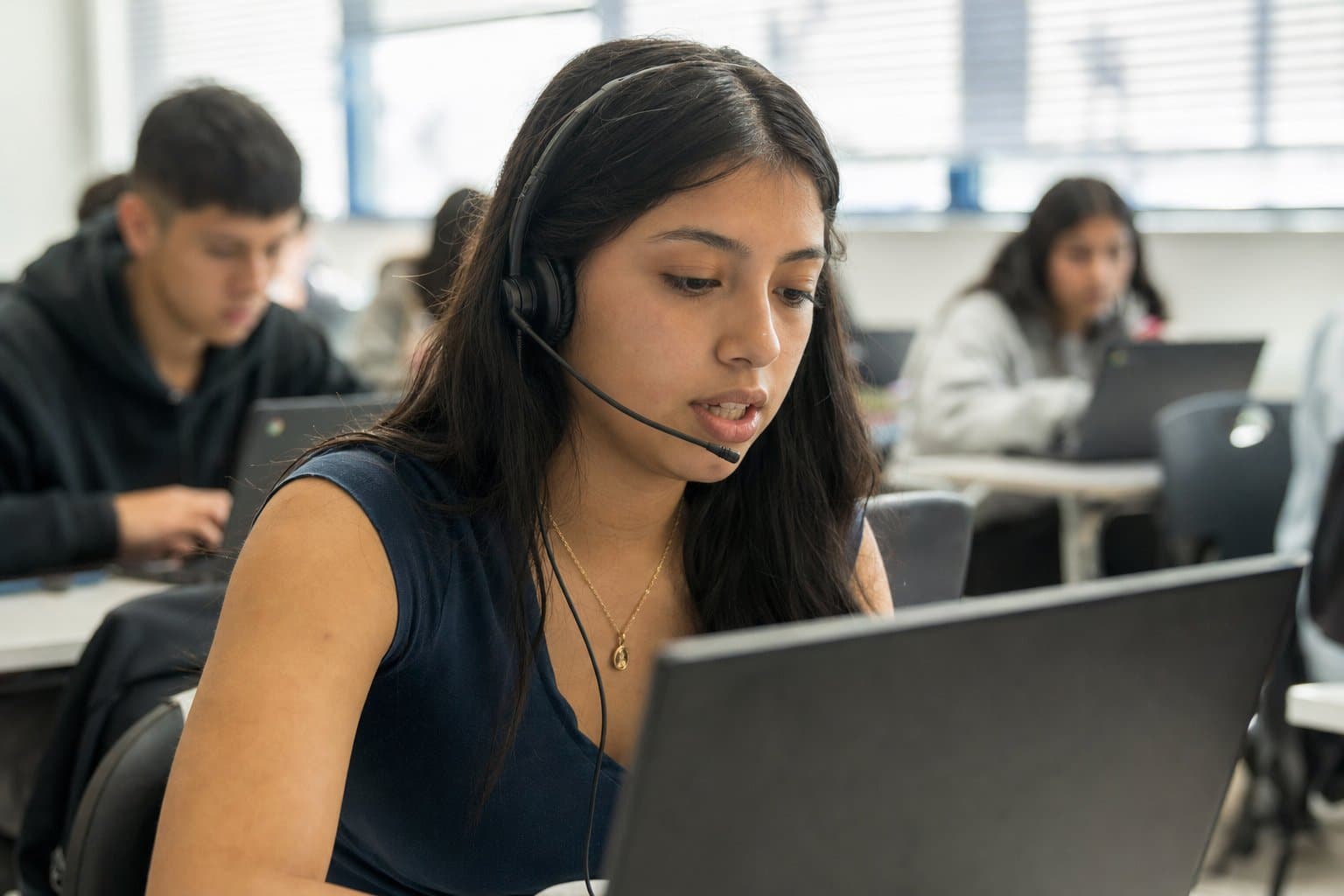
| AAPPL (Form B) | ACTFL, delivered by Language Testing International | Interpersonal listening and speaking, presentational writing, interpretive reading and listening | Online, proctored, headset and microphone; “approximately two hours”; 12 languages including ASL |
| STAMP 4S | Avant Assessment | Reading, writing, listening, speaking | Online, adaptive; “around 120 minutes”; speaking answers recorded, up to 3 minutes each; 15 languages |
| STAMP WS, Avant SuperLanguage | Avant Assessment | Writing and speaking | For languages without a four-skill test; STAMP WS covers 38 languages |
| ACTFL OPI or OPIc, plus WPT | ACTFL, via LTI | Speaking (interview) and writing | OPI 20 to 25 minutes by phone; OPIc online under 40 minutes; WPT 45 to 60 minutes; covers many less commonly taught languages |
| ALIRA | ACTFL, via LTI | Latin reading | Online, adaptive, within 50 minutes |
| AP Language and Culture | College Board | All four skills | AP Spanish Language about 2 hours 30 minutes, spoken answers recorded |
| IB Language B (and A) | International Baccalaureate | Oral, writing, listening and reading | For students in IB programs; includes a 15-minute individual oral |
| ASLPI, SLPI:ASL | Gallaudet University; RIT/NTID | American Sign Language | Recorded or live signed interview, 20 to 25 minutes |
| CEFR exams (DELE, DELF, Goethe, SIELE and others) | National language institutes | All four skills | Accepted at B1 in states such as New Jersey, Washington, Iowa and Connecticut |
What Score You Need, by Test
States set the bar on the ACTFL scale and translate it into each test’s scores. The publishers’ own conversions are:
| ACTFL level | AAPPL | STAMP |
|---|---|---|
| Intermediate Low | I-1 | 4 |
| Intermediate Mid | I-2, I-3, I-4 | 5 |
| Intermediate High | I-5 | 6 |
| Advanced Low | A-1 | 7 |
Sources: LTI’s AAPPL sample score report and Avant’s STAMP scaled scores. LTI adds a caution: “AAPPL scores are not the same as the proficiency scores associated with the ACTFL Proficiency Guidelines.” That is why states set their own AAPPL cut, from I-2 to I-4, even when they all call it Intermediate Mid.
What eight states require on the most common tests:
| State | Level | AAPPL | STAMP | AP | IB |
|---|---|---|---|---|---|
| New Jersey | Intermediate Mid | I-3 on all four components | 5 on all four | 4 | 4 (IB students only) |
| Washington (Intermediate award) | Intermediate Mid | I-4 | 5 | 3 | SL 4, HL 3 |
| Arkansas | Intermediate Mid, average composite | I-4 average | 5.0 average | 3 | 4 |
| Colorado | Mostly Intermediate Mid | I-4 in all domains | 5 | 3 | 4 |
| Utah | Intermediate Mid | I-2 on 3 of 4, speaking and writing required | 5 on 3 of 4 | 3 | SL 4, HL 3 |
| Iowa | Intermediate | I-2 | 5 | 3 | 4 |
| Connecticut | Intermediate Mid, each domain | I-3 in all four | Intermediate Mid | 3 | 4 |
| Nevada | Intermediate Mid, every skill | I-4 in all domains | 5 | 3 | 4 |
Two details decide results more than the headline level. First, whether the minimum applies to every domain or to an average: Connecticut says the minimum “must be earned on each domain, rather than just on the composite score,” while Arkansas uses an average composite. Second, whether speaking must be tested: Utah allows 3 of 4 components but requires speaking and writing. For states at Intermediate High, see the Maryland, Michigan and Ohio guides, and the full comparison in Seal of Biliteracy by state.
Seal of Biliteracy Practice Tests
Quick answer: there is no single official Seal of Biliteracy practice test, but every major test publisher offers a free demo or sample.
| Test | Free practice resource |
|---|---|
| AAPPL | AAPPL demos for each component, in all 12 languages |
| STAMP 4S and STAMP WS | Sample tests with a login for each language |
| ALIRA (Latin) | ALIRA demo |
| OPI and WPT | WPT demo linked from ACTFL’s Seal of Biliteracy page |
| AP Spanish Language and Culture | Past free-response questions, scoring guidelines and audio samples |
A demo teaches the format: the headset, the recording, the timing. What moves a score from Intermediate Low to Intermediate Mid is the language itself, above all the ability to speak in connected sentences rather than single words, which takes months of practice, not a practice session.
The Seal of Biliteracy Test in Spanish
Spanish is the language with the most options. A Spanish speaker can take the AAPPL or STAMP 4S in Spanish, the AP Spanish Language and Culture exam, or, in states that accept CEFR exams, the DELE or SIELE at level B1. Heritage speakers often reach the speaking bar quickly and are held back by writing or reading, so the test choice matters: a four-skill test like STAMP 4S requires all four, while some states also accept the OPI with the WPT for speaking and writing.
How Long the Test Takes and What It Costs
- AAPPL: about two hours for the four components. LTI does not publish a standard price; partner pricing, for example through California’s ATDLE, starts at $20 per test.
- STAMP 4S: about 120 minutes. Avant lists $79.90 per test at standard price and $24.90 for education buyers of 60 tests or more.
- OPI plus WPT: 20 to 25 minutes for the interview and 45 to 60 minutes for the writing test.
- Who pays: it depends on the state and district. New Jersey, for example, leaves test costs to local districts, and Washington’s state funding for custom language testing “has been discontinued.”
The English Side, and English Learners
The second-language test is only half of the seal. English proficiency is usually shown through graduation requirements or a state test, and several states let English learners use their English language proficiency test:
- New Jersey: ACCESS for ELLs, “at least 4 on all sections” on Tier B or C, during junior year.
- Utah: WIDA “Overall Composite score of 4.2 or higher with a Speaking score of 3.5 or higher.”
- Iowa: ELPA21 grades 9-12, “4 or 5” in all domains.
- Arkansas: ELPA21 “Overall Proficient.”
- Washington has no English learner test route: students meet the English graduation requirements.
For English learners, the home language is often the easier half. The seal recognizes it, which is one reason districts with large English learner populations award many seals.
Global Seal of Biliteracy vs a State Seal
| State Seal of Biliteracy | Global Seal of Biliteracy | |
|---|---|---|
| Who awards it | The state education agency, through participating districts | An independent certifying body founded in 2018 |
| Who can earn it | Generally graduates of public high schools in that state | “anyone, regardless of age, background, or education” |
| Levels | Usually one level (some states have two) | Functional Fluency (Intermediate Mid), Working Fluency (Advanced Low), Professional Fluency (Advanced High) |
| Where it appears | Diploma or transcript | A certificate |
| Cost | Set by the state and district | “Both the application and the certificate are free,” testing is not |
Students who cannot earn a state seal, for example private or home-schooled students in Washington, are pointed to the Global Seal. Its accepted tests are searchable in the Global Seal Test Finder.
When to Take the Test
- New Jersey: from January 1 of junior year to February 17 of senior year; AP, IB or NEWL exams taken in senior year do not count.
- Washington: any grade, with grade 8 or 9 suggested.
- Utah: grades 9 through 12, except WIDA.
- Connecticut: grade 10 or later.
- Nevada: not before grade 9, with grades 11-12 recommended.
Testing in junior year leaves time for a retake. The step-by-step plan is in how to get the Seal of Biliteracy.
District Benchmark: The Cost of Testing Everyone Who Might Qualify
Take a high school with 300 juniors, 90 of them in upper-level world language courses or heritage speakers. Testing all 90 on STAMP 4S at the $24.90 education price costs about $2,240 and three hours of lab time per group. Testing only the students who ask costs less, but the seals go to the students who already knew about the award, and heritage speakers, often English learners, are the ones most likely to miss it.
Common Mistakes
- Assuming any AAPPL I-level qualifies. States set their own cut, from I-2 to I-4.
- Taking a two-skill test where four are required. Check whether the state needs all four domains.
- Testing too late. Senior-year AP exams do not count in New Jersey.
- Relying on a practice test. It teaches the format, not the level.
- Missing heritage speakers. They are often closest to the bar in speaking and furthest in writing.
Recommended Actions
Immediate (this month): Check your state’s approved test list and the score it requires on each test, domain by domain.
Medium-term (this year): Run one free publisher demo with every candidate and test juniors in spring.
Long-term (strategy): Screen world language and English learner rosters every year for candidates, instead of waiting for applications.
Questions to Ask
- Which tests does our state accept, and what score on each?
- Does the minimum apply to every domain or to an average?
- Who pays for the test, and when is our testing window?
- Which heritage speakers and English learners have never been told about the seal?
Frequently Asked Questions
What test do you take for the Seal of Biliteracy?
Any assessment your state approves. The most widely accepted are the AAPPL and STAMP 4S; AP and IB language exams, the OPI with the WPT, and CEFR exams also count in many states.
What score do you need on the Seal of Biliteracy test?
Usually the equivalent of ACTFL Intermediate Mid: STAMP 5, or an AAPPL score between I-2 and I-4 depending on the state. Some states require Intermediate High: STAMP 6 or AAPPL I-5.
How long is the Seal of Biliteracy test?
About two hours for the AAPPL or STAMP 4S. The OPI takes 20 to 25 minutes and the WPT 45 to 60 minutes.
Is there a Seal of Biliteracy practice test?
Not a single one, but AAPPL, STAMP, ALIRA and the WPT all have free official demos, and College Board publishes past AP questions with audio samples.
Where can I take the Seal of Biliteracy test?
Usually at your high school, which orders and proctors the test. Some states and publishers also allow proctored testing outside school.
Is the Global Seal of Biliteracy the same as a state seal?
No. It is an independent credential that anyone can earn, at three levels, with a free application; a state seal is awarded to public high school graduates on the diploma or transcript.
Related Resources
- How to Get the Seal of Biliteracy
- Seal of Biliteracy Requirements
- Seal of Biliteracy by State
- What Is the Seal of Biliteracy?
- California Seal of Biliteracy
- New Jersey Seal of Biliteracy
Conclusion
The Seal of Biliteracy test is a choice from a state list, not a single exam: AAPPL and STAMP for most students, AP and IB for students already in those programs, and specialized tests for ASL, Latin and less common languages. The bar is usually Intermediate Mid, but the exact score and whether it applies to every domain change from state to state. Check both before choosing the test.
Sources: LTI, AAPPL; LTI, AAPPL sample score report; Avant, STAMP 4S FAQ; Avant, STAMP scaled scores; Avant, State Seals of Biliteracy; Guidelines for Implementing the Seal of Biliteracy (2020); Global Seal of Biliteracy; NJDOE; OSPI, Approved Assessment Options; CSDE, Seal of Biliteracy Guidelines 2025; USBE, Assessment Requirements (April 2026); Iowa Department of Education. Verified September 28, 2026.
The Part of the Test That Takes Years
Every test on the list records the student speaking. Intermediate Mid in speaking means handling a conversation in connected sentences, asking and answering questions, not reciting memorized phrases. Students who take four years of a language often reach it in reading before they reach it in speaking, because a class of twenty-five leaves each student a few minutes of talk a day. That is the Speaking Time Gap.
Some schools add speaking practice that does not depend on class time. Telo AI is one example: short conversation sessions in English, Spanish or French that adapt to each student’s level and ask follow-up questions instead of accepting one-word answers. See how that works across a school year.
The test takes two hours. The speaking score it measures takes years of conversations.
Found this guide useful?
Preferred sources show up more often in your Google results, including AI Overviews.